
Dr. William Makis: The Physician Bringing Fenbendazole Research to Thousands
By bb • BP Life • July 2026 • 18 min read
In the world of emerging cancer research, few names carry as much weight among patients and independent researchers as Dr. William Makis, MD. A McGill-trained physician with over 110 peer-reviewed publications, Dr. Makis has become one of the most prominent public advocates for fenbendazole research — building an international following of more than 146,000 subscribers who turn to him for the latest science, clinical evidence, and patient-reported outcomes involving repurposed antiparasitic compounds.
This article explores Dr. Makis's credentials, his published research, the peer-reviewed clinical evidence behind fenbendazole, ivermectin, and mebendazole, and the growing body of patient testimonials that have made this area of research impossible to ignore.
Disclaimer: This article is for informational and educational purposes only. It is not medical advice, and BP Life does not make any claims that fenbendazole, mebendazole, or ivermectin can treat, cure, or prevent cancer. The information presented here reflects published research, peer-reviewed studies, and publicly reported patient experiences. Always consult a qualified healthcare professional before making any decisions about your health.
IN THIS ARTICLE
Who Is Dr. William Makis?
Dr. William Makis is a physician who earned his medical degree from McGill University, one of Canada's most prestigious medical schools. Over the course of his career, he has authored or co-authored more than 110 peer-reviewed publications — a level of academic output that places him among the most prolific researchers working in this space.
Dr. Makis currently practices in Florida, USA, where he offers telehealth cancer consultations to patients seeking information about repurposed drug protocols. His practice centers on providing patients with evidence-based information about compounds like fenbendazole, mebendazole, and ivermectin — medications that were originally developed as antiparasitic agents but have shown promising anticancer properties in both laboratory and clinical settings.
110+
Peer-reviewed publications
146K+
Substack subscribers
1,000+
Patient testimonials published
McGill
Medical degree
What sets Dr. Makis apart from many researchers is his commitment to transparency. Through his Substack newsletter (146,000+ subscribers) and his presence on X (@MakisMD), he regularly publishes detailed case reports, protocol updates, peer-reviewed research summaries, and patient-reported outcomes. He has published more than 1,000 patient testimonials — creating one of the largest publicly available collections of patient-reported fenbendazole outcomes.
His work has attracted the attention of other respected physicians in the repurposed medicine space, including Dr. Paul Marik (co-founder of the FLCCC Alliance) and Dr. Ilyes Baghli, with whom Dr. Makis has co-authored peer-reviewed research on orthomolecular cancer protocols.
"The evidence for fenbendazole as an anticancer agent continues to grow with every published case, every peer-reviewed paper, and every patient who reports their outcomes."
— Reflecting the trajectory of Dr. Makis's published work
From Joe Tippens to Dr. Makis: The Evolution of Fenbendazole Protocols
To understand Dr. Makis's contribution, it helps to understand where the story began. The modern fenbendazole movement traces its origins to Joe Tippens, an Oklahoma man whose remarkable experience captured worldwide attention and launched an entirely new area of patient-driven research.
The Joe Tippens Story
In 2016, Joe Tippens was diagnosed with Stage 4 small cell lung cancer — one of the most aggressive forms of the disease. The cancer had metastasized throughout his body. His oncologist gave him a less than 1% chance of survival.
While enrolled in a clinical trial, According to Tippens's account, a veterinarian told him that researchers at Merck Animal Health had observed something unexpected: laboratory mice with cancer that were given fenbendazole (an animal dewormer) appeared to have their tumors eliminated.
Tippens decided to try it himself. His protocol was simple:
- Fenbendazole 222 mg (Panacur-C) — 3 days on, 4 days off
- Vitamin E 400–800 mg daily
- Curcumin 600 mg daily
- CBD oil 25 mg daily
Three months later, according to Tippens, his PET scan came back completely clear — showing no evidence of active disease. He shared his story on a blog called My Cancer Story Rocks, and it spread rapidly across the internet — particularly in South Korea, where fenbendazole research became a mainstream topic covered by major media outlets.
To learn more about the Joe Tippens Protocol and how it works, visit our detailed guide: The Joe Tippens Protocol: A Complete Guide.
How Dr. Makis Built on the Foundation
While Joe Tippens's story introduced fenbendazole to the world, Dr. Makis recognized that there was far more to explore. Through his medical training, research background, and direct consultations with thousands of cancer patients, Dr. Makis began developing more comprehensive, higher-dose protocols tailored to specific cancer types and stages.
Where the original Tippens protocol used 222 mg of fenbendazole on a 3-on/4-off cycle, Dr. Makis's protocols — based on his clinical observations and published research — typically employ daily dosing at 444 mg to 1,000 mg or higher, sometimes combined with mebendazole for particularly aggressive cancers.
The evolution from the Tippens protocol to Dr. Makis's current protocols represents years of accumulated clinical observation, published research, and patient-reported data involving thousands of individuals.
The Science: 12 Anticancer Mechanisms of Fenbendazole
One of Dr. Makis's most significant contributions has been synthesizing the published scientific literature on fenbendazole's anticancer mechanisms. According to his research and the broader body of peer-reviewed studies, preclinical studies suggest fenbendazole may target cancer cells through at least 12 distinct biological mechanisms — a multi-pathway approach that may explain both its effectiveness and its ability to work against many different cancer types.
Here are the key mechanisms identified in the published literature, as highlighted by Dr. Makis:
Most conventional cancer drugs target just one or two pathways. According to the published preclinical research that Dr. Makis highlights, fenbendazole's ability to simultaneously affect multiple mechanisms in laboratory settings may be one of the reasons patients report positive outcomes across many different cancer types. This multi-target approach is consistent with the broader concept of "dirty drugs" — compounds that affect multiple pathways — which some oncology researchers believe may be more effective than single-target therapies.
For a deeper introduction to fenbendazole, including what it is and how it works, visit our guide: What Is Fenbendazole?
Published Clinical Evidence
Perhaps the most significant development in Dr. Makis's work — and in the fenbendazole research space overall — has been the publication of peer-reviewed clinical evidence in indexed medical journals. For years, critics dismissed fenbendazole research as "anecdotal." The publication of peer-reviewed case reports and observational studies has expanded the available literature beyond anecdotal online reports.
PubMed Case Series: Fenbendazole as an Anticancer Agent (PMID: 40605964)
Title: "Fenbendazole as an Anticancer Agent? A Case Series of Self-Administered Cases"
Index: PubMed (PMID: 40605964)
Patients: 3 individuals with advanced cancer (breast, prostate, melanoma)
Key findings:
- 2 out of 3 patients achieved complete remission
- 1 patient achieved near-complete remission
- All patients self-administered fenbendazole alongside supportive therapies (excluding chemotherapy)
This PubMed-indexed case series is significant for several reasons. First, it represents formally published, peer-reviewed documentation of fenbendazole use in human cancer patients with advanced disease. Second, the outcomes — two complete remissions and one near-complete remission in three advanced-stage patients — are notable, although the study was limited to three self-administered cases without a control group. Third, the patients achieved these results while excluding conventional chemotherapy, relying instead on fenbendazole combined with supportive supplements.
Anticancer Research 2026: The Largest Real-World Study to Date
Title: "Real-world Clinical Outcomes of Ivermectin and Mebendazole in Cancer Patients: Results from a Prospective Observational Cohort"
Authors: Hulscher et al.
Journal: Anticancer Research (international peer-reviewed oncology journal)
Year: 2026
Key findings:
- 197 cancer patients evaluated — the largest real-world human study to date on ivermectin + mebendazole in cancer
- Nearly half of participants self-reported clinical benefit
- High rates of self-reported benefit with manageable safety profile
- Results support further investigation in controlled clinical trials
The Hulscher et al. study published in Anticancer Research is a landmark in this field. As an international, peer-reviewed oncology journal, Anticancer Research is a well-established publication in the cancer research community. The study's finding that nearly half of 197 cancer patients self-reported clinical benefit from ivermectin and mebendazole — with a manageable safety profile — provides the kind of real-world evidence that has been demanded by the medical community.
This study is particularly important because it evaluates the combination of ivermectin and mebendazole, two of the key compounds in Dr. Makis's broader protocols alongside fenbendazole. The three benzimidazole-class compounds (fenbendazole and mebendazole) share similar mechanisms of action, while ivermectin brings its own set of documented anticancer properties.
Journal of Orthomolecular Medicine: The Hybrid Protocol
Journal: Journal of Orthomolecular Medicine
Published: September 19, 2024
Co-authors: Dr. William Makis, Dr. Ilyes Baghli, and Dr. Paul Marik
Focus: A detailed hybrid orthomolecular protocol integrating repurposed drugs with nutritional and metabolic support strategies for cancer patients.
This publication, co-authored with two of the most recognized names in integrative and metabolic medicine — Dr. Paul Marik and Dr. Ilyes Baghli — details a comprehensive approach that combines repurposed antiparasitic compounds with orthomolecular (nutritional) strategies. The collaboration with Dr. Marik, who is widely known for his work with the FLCCC Alliance, adds significant credibility and medical authority to the protocol framework.
Three peer-reviewed publications. Two oncology journals. 200+ patients documented. The clinical evidence for repurposed antiparasitic compounds in cancer research is no longer theoretical — it is published, indexed, and peer-reviewed.
Patient Testimonials: Real Stories From Dr. Makis's Published Cases
While peer-reviewed publications provide the scientific foundation, it is the thousands of patient testimonials published by Dr. Makis that have driven much of the public interest in fenbendazole. These are not anonymous internet posts — they are detailed case reports that Dr. Makis has published through his Substack newsletter, often including imaging results, lab values, and timeline details.
The following are highlights from patient-reported cases that Dr. Makis has publicly documented:
Stage 3 ovarian cancer: According to a case published by Dr. Makis, a patient reported complete tumor resolution within 2 months of beginning a fenbendazole-based protocol. The patient reported that imaging showed no detectable tumor activity after a treatment period described as remarkably rapid.
83-year-old with Stage 3 follicular lymphoma: According to a case published by Dr. Makis, this patient reported achieving near-total remission within 6 months using a fenbendazole protocol. The case is notable because follicular lymphoma in elderly patients is typically managed rather than treated with curative intent.
54-year-old with recurrent prostate cancer: According to a case published by Dr. Makis, after previous conventional treatment failed to prevent recurrence, this patient began a fenbendazole protocol and reported achieving remission within 4 months. His PSA levels, a key marker for prostate cancer activity, reportedly showed significant decline during the treatment period.
Stage 4 renal cell carcinoma: According to a case published by Dr. Makis, a patient with cancer that had metastasized to the lungs reported a 71% reduction in lung metastases over 6 months while using a fenbendazole-based protocol. A reduction of metastatic burden of this magnitude, if confirmed, would be significant regardless of the treatment approach.
Brain cancer (DIPG) in a 5-year-old: Diffuse intrinsic pontine glioma is one of the most devastating pediatric cancers, with very limited treatment options. According to a case published by Dr. Makis, a family reported tumor shrinkage after 4 months on a fenbendazole protocol — a result that, if confirmed, would be notable in a disease where meaningful tumor regression is rare.
61-year-old with Gleason 8 prostate cancer: According to a case published by Dr. Makis, this patient used fenbendazole prior to surgery and his pathology report showed a downgrade from Gleason 8 to Gleason 7. A Gleason downgrade between biopsy and surgery, while not unheard of, is relatively uncommon and may suggest a reduction in tumor aggressiveness.
These testimonials are drawn from cases published by Dr. Makis on his Substack newsletter. Individual results vary, and these outcomes should not be interpreted as guaranteed results. Many patients in Dr. Makis's published cases used fenbendazole alongside other supplements, dietary changes, and in some cases, concurrent or prior conventional treatments. These stories are shared for informational purposes to illustrate the range of reported experiences.
Understanding the Protocols
One of Dr. Makis's most valuable contributions has been the development of structured, tiered protocols that categorize fenbendazole dosing based on cancer type, aggressiveness, and patient tolerance. Unlike the one-size-fits-all approach of the original Tippens protocol, Dr. Makis's 2025–2026 protocols reflect years of published clinical experience, patient-reported outcomes, and observational data.
The following is an informational overview of the protocol tiers as published by Dr. Makis. This is not medical advice, and anyone considering these protocols should consult directly with a qualified healthcare provider.
For: Most common cancers — breast, colon, lung, prostate, melanoma, renal, gastric
This is the most widely used tier, designed for the majority of cancer types that patients encounter. Dr. Makis has published the most patient data in this category.
Ivermectin 1.0 mg/kg/day Fenbendazole 444–1,000 mg/dayFor: Lymphoma, leukemia, pancreatic cancer, glioblastoma (GBM), sarcoma
For highly aggressive cancers where rapid progression demands a more intensive approach, Dr. Makis's published protocols combine the highest ivermectin doses with dual benzimidazole compounds — fenbendazole and mebendazole simultaneously — for maximum pathway coverage.
Ivermectin 1.5–2.0 mg/kg/day Fenbendazole 1,000 mg/day + Mebendazole 1,000–1,500 mg/dayFor: Ovarian, uterine, and some breast cancers — particularly when patients cannot tolerate high-dose ivermectin
This tier reduces the ivermectin dose while increasing fenbendazole to the highest levels of any protocol. It is designed for patients who respond better to benzimidazoles than ivermectin, or who experience side effects at higher ivermectin doses.
Ivermectin 0.5–1.0 mg/kg/day Fenbendazole 1,000–2,222 mg/dayFor: Patients who have achieved NED (No Evidence of Disease) and want to maintain remission
After achieving remission, Dr. Makis's published protocols suggest lower maintenance doses of both ivermectin and fenbendazole to help prevent recurrence — addressing one of the most feared aspects of cancer treatment: the return of disease after initial success.
Ivermectin 0.5–1.0 mg/kg, 3–5 days/week Fenbendazole 444 mg/dayImportant: These protocols are presented for informational purposes only, based on Dr. Makis's published work. BP Life does not recommend, prescribe, or endorse any specific cancer treatment protocol. Dosing, duration, and suitability depend on individual medical circumstances. Always work with a qualified healthcare provider.
For patients looking to follow the original foundational protocol, see our guide: The Joe Tippens Protocol: A Complete Guide.
The Synergy Effect: Why Supplements Matter
One of the most intriguing aspects of fenbendazole research — and one that Dr. Makis frequently highlights — is the synergistic effect observed when fenbendazole is combined with specific vitamins and supplements.
A key piece of evidence comes from a 2008 study involving mice with human lymphoma xenografts (human cancer cells transplanted into mice). The study tested three conditions:
| Condition | Effect on Tumor Growth |
|---|---|
| Vitamins alone | No significant change |
| Fenbendazole alone | No significant change |
| Vitamins + Fenbendazole | Significant inhibition of tumor growth |
This finding is remarkable: neither fenbendazole nor vitamins alone produced a meaningful effect on tumor growth in this model. But when combined, the result was statistically significant tumor inhibition. Researchers identified Vitamin E as the key synergistic partner — which is notably one of the core supplements in the original Joe Tippens Protocol.
This synergy data helps explain why every major fenbendazole protocol, from Joe Tippens's original approach to Dr. Makis's advanced tiers, includes supplemental vitamins as a core component rather than an afterthought. In this experimental model, fenbendazole did not appear to work in isolation — the combination is what drives the result.
In the 2008 study, neither fenbendazole alone nor vitamins alone affected tumor growth. Only the combination produced significant tumor inhibition — underscoring why every major protocol pairs fenbendazole with supportive supplements.
The Role of Fenbendazole Quality
As interest in fenbendazole has grown, so has the number of suppliers — and not all fenbendazole products are created equal. Dr. Makis has spoken about the importance of high purity and third-party lab testing when selecting a fenbendazole source, emphasizing that contaminants, inaccurate dosing, and degraded products can compromise outcomes.
This is an area where the quality of your fenbendazole source genuinely matters. Key considerations include:
- Third-party lab testing — Independent verification of purity, potency, and absence of contaminants
- Accurate dosing — Capsules that contain exactly the stated amount of fenbendazole
- High purity — Free from heavy metals, microbial contamination, and chemical impurities
- Proper storage and handling — Fenbendazole can degrade with improper storage conditions
- Transparent sourcing — Clear information about where and how the product is manufactured
At BP Life, every batch of fenbendazole is independently third-party lab tested for purity, potency, and contaminants. We publish our lab results because we believe transparency is non-negotiable when people are making decisions about their health. You can view our testing documentation on our Lab Testing page.
Explore BP Life's Lab-Tested Fenbendazole Products
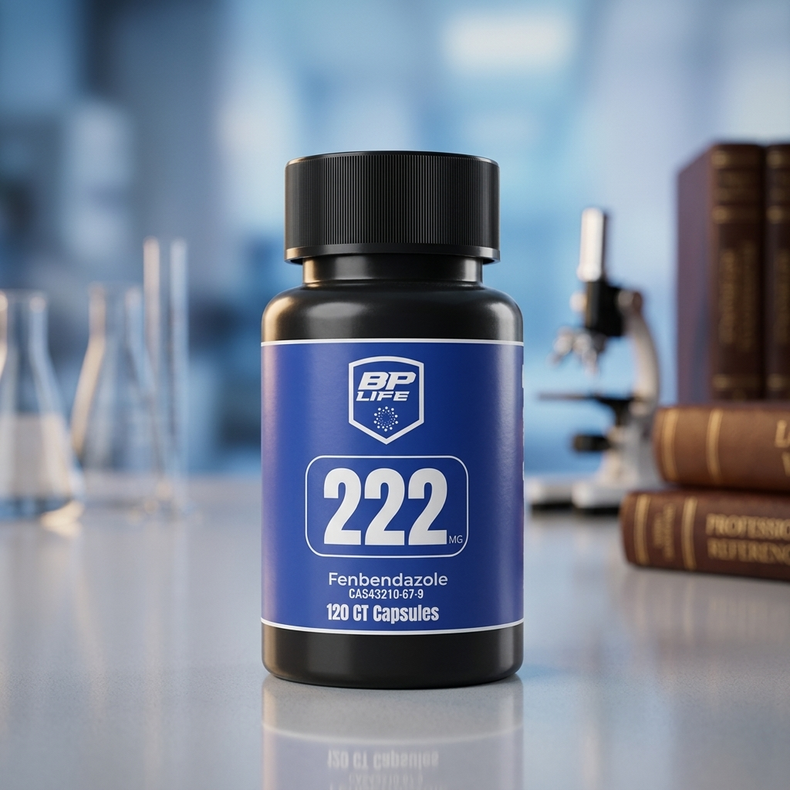
Browse All Fenbendazole 444 mg Capsules 222 mg Capsules 100g PowderWhether you are following the original Joe Tippens Protocol at 222 mg, Dr. Makis's standard protocol at 444 mg, or exploring higher-dose approaches, the foundation of any protocol starts with pure, accurately dosed fenbendazole from a trusted source.
Conclusion: A Physician, a Movement, and a Growing Body of Evidence
Dr. William Makis represents something important in the landscape of cancer research: a credentialed, published physician who has dedicated much of his recent work to investigating compounds that the broader medical establishment has been slow to study. With over 110 peer-reviewed publications, a medical degree from McGill, and a following of more than 146,000 subscribers who rely on his work, Dr. Makis has built one of the most comprehensive databases of fenbendazole, mebendazole, and ivermectin cancer research in the world.
The evidence continues to build:
- A PubMed-indexed case series documenting complete and near-complete remissions in advanced cancer patients using fenbendazole
- One of the largest real-world human studies to date on ivermectin and mebendazole in cancer, published in the peer-reviewed journal Anticancer Research, showing nearly half of 197 patients self-reported clinical benefit
- A peer-reviewed orthomolecular protocol co-authored with Dr. Paul Marik and published in the Journal of Orthomolecular Medicine
- More than 1,000 patient testimonials spanning dozens of cancer types, published with detailed timelines and outcomes
- 12 identified anticancer mechanisms supported by the published scientific literature
Is this the final word on fenbendazole and cancer? No. Controlled clinical trials are still needed, and the medical community rightly demands rigorous evidence before changing treatment standards. But what Dr. Makis has accomplished — bridging the gap between laboratory research and real-world patient outcomes, and doing so publicly with full transparency — has moved this field forward in ways that would not have been possible without his dedication.
For the tens of thousands of patients and families who have turned to his work for hope and information, Dr. Makis has provided something invaluable: a bridge between the science and the patient.
From Joe Tippens's original story to Dr. Makis's comprehensive protocols and peer-reviewed publications, fenbendazole research has grown from a single patient's experience into a global movement supported by an expanding body of preclinical research, case reports, observational studies, and growing clinical literature.
Medical Disclaimer: This article is for informational and educational purposes only. It does not constitute medical advice, diagnosis, or treatment recommendations. The content reflects published peer-reviewed research, publicly available case reports, and patient-reported outcomes as documented by Dr. William Makis and other researchers. Fenbendazole is an antiparasitic compound not FDA-approved for the treatment of cancer in humans. BP Life does not claim that fenbendazole, mebendazole, or ivermectin can treat, cure, or prevent cancer. Individual results vary significantly. Always consult with a qualified healthcare professional before starting any new supplement or treatment protocol. Nothing in this article should be construed as a substitute for professional medical advice.
Published by BP Life • shopbplife.com • July 2026