
This article is for general educational purposes only and is not medical advice. It does not diagnose, treat, cure, or prevent any disease. Consult a qualified healthcare provider before starting any new supplement, especially if you take medications or have a health condition.
If you've ever wondered whether your supplements are actually being absorbed — or whether you're taking them at the right time — you're asking the right question. How and when you take a supplement can matter just as much as the supplement itself. Two people can take the exact same product and get very different results, largely because of timing, stomach contents, and whether any dietary fat was present. This guide breaks down the simple, science-backed rules for getting the most out of what you take.
Water-Soluble vs. Fat-Soluble: Why It Changes Everything
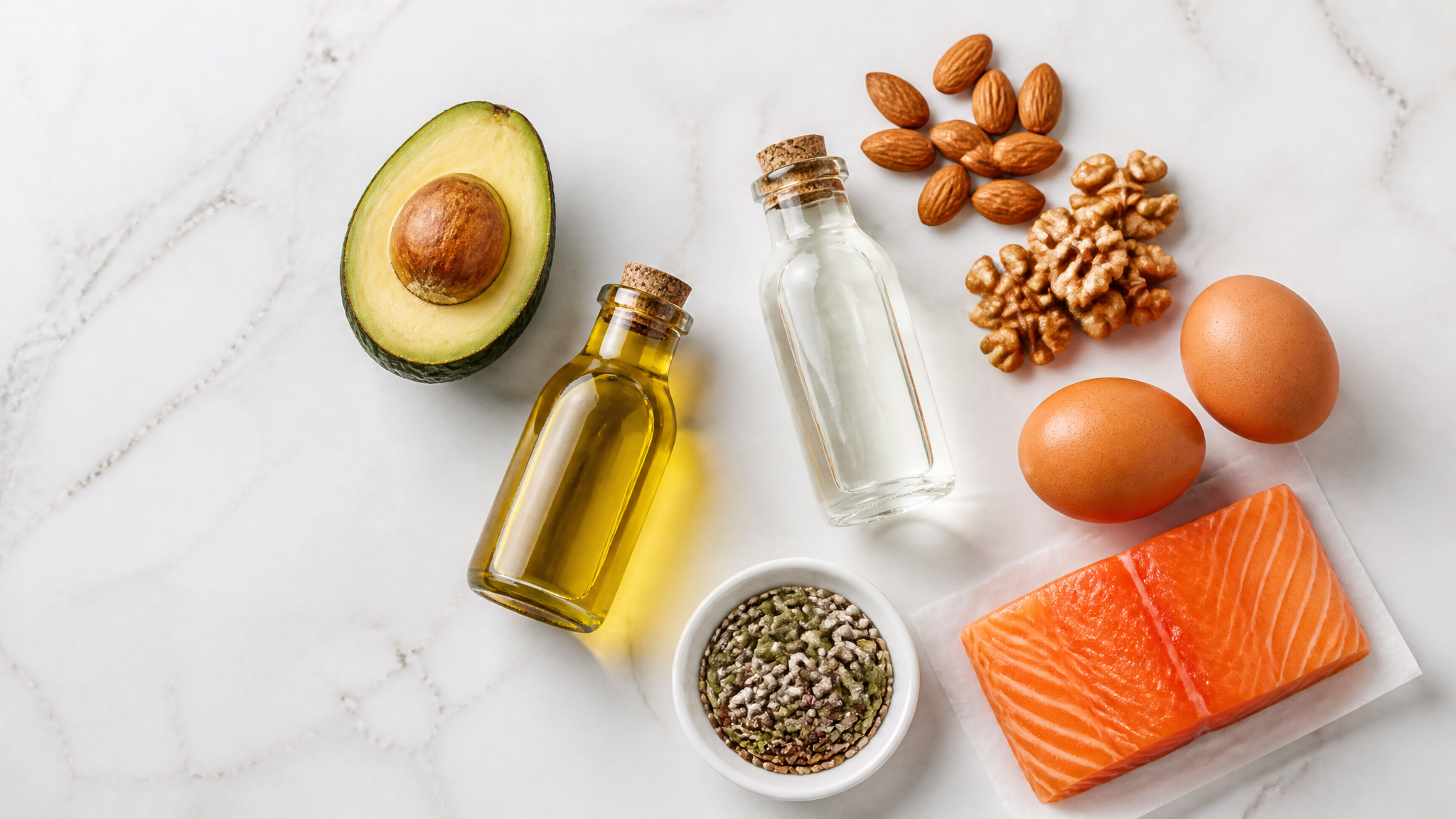
Compounds generally fall into two camps. Water-soluble ones (like vitamin C and the B vitamins) dissolve in water and are absorbed easily on a relatively empty stomach. Fat-soluble ones behave very differently — they need dietary fat present in the gut to be absorbed efficiently. This single distinction drives almost every “take with food or not?” decision. Many popular compounds are fat-soluble, including vitamins A, D, E, and K, CoQ10, turmeric/curcumin, omega-3s, and a range of other fat-soluble ingredients. If a compound is fat-soluble, taking it without any fat can mean a large share simply passes through unused.
Why Dietary Fat Dramatically Improves Absorption
Fat-soluble compounds hitch a ride through your digestive system using the same machinery your body uses to absorb dietary fat. When you eat fat, your body releases bile and forms tiny transport droplets (micelles) that carry fat-soluble molecules across the gut lining into the bloodstream. No fat present means fewer of those transport vehicles — and lower absorption. Studies on fat-soluble nutrients have repeatedly shown that taking them alongside a fat-containing meal can increase absorption several-fold compared to taking them on an empty stomach.
The Best Foods to Take With Fat-Soluble Supplements
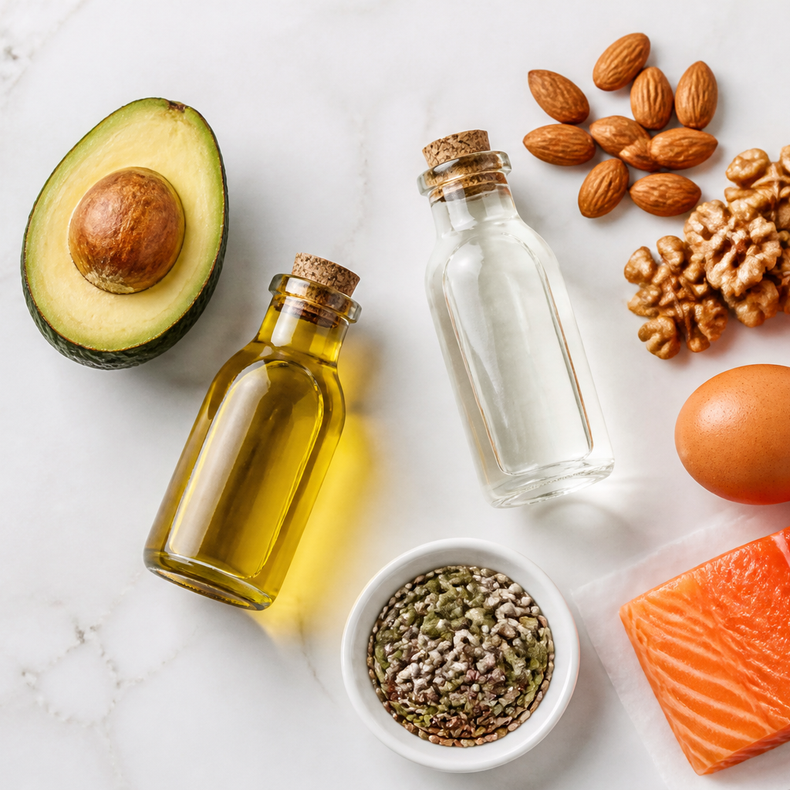
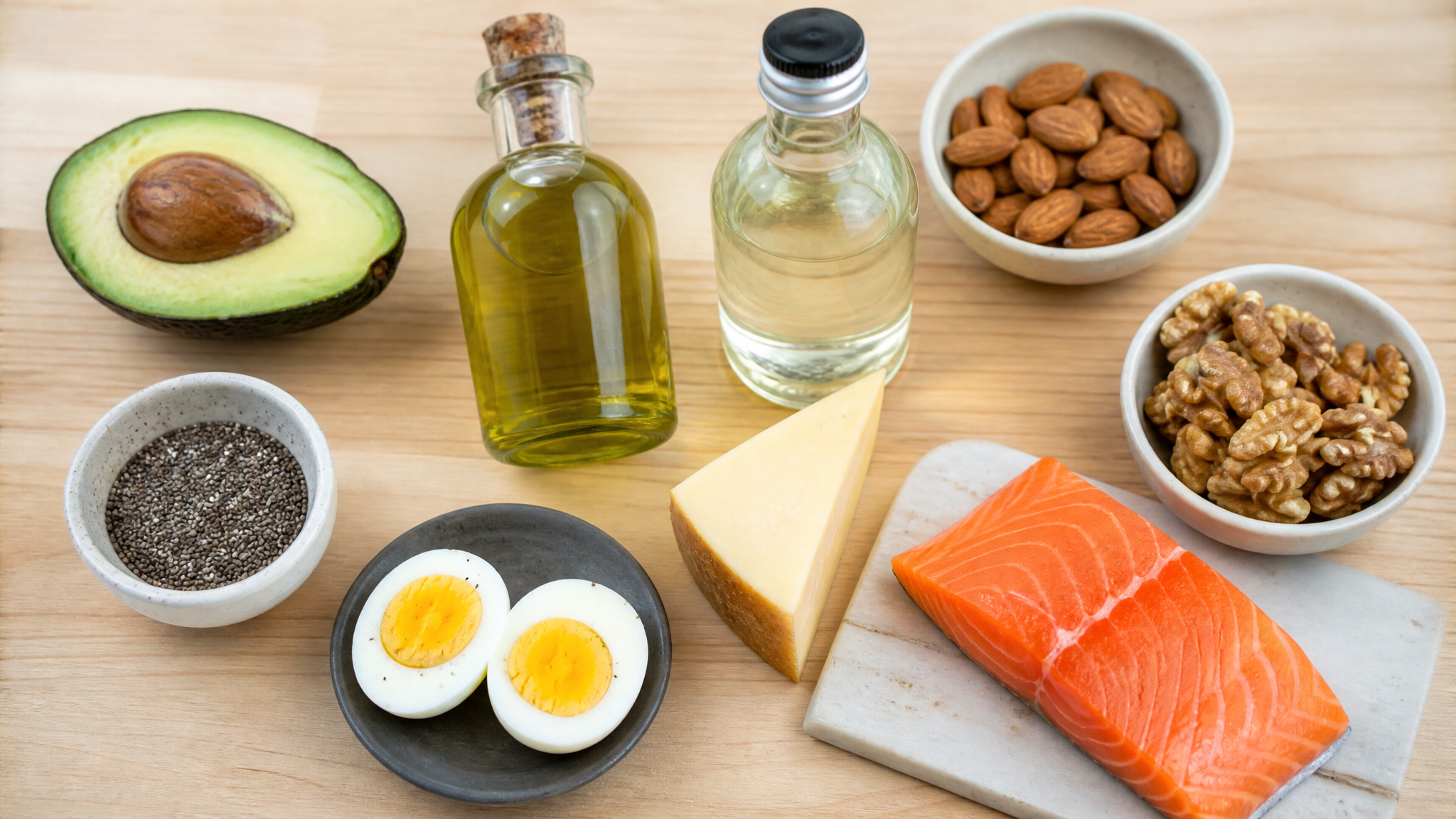
You don't need a huge meal — just a meaningful amount of healthy fat. Good pairings include:
- Avocado
- Olive oil or coconut oil
- MCT oil — a convenient, flavorless option that's easy to add to coffee, a smoothie, or a spoonful on its own
- Nuts and nut butters (almonds, walnuts, peanut butter)
- Eggs
- Full-fat yogurt or cheese
- Fatty fish (salmon, sardines)
- Seeds (chia, flax)
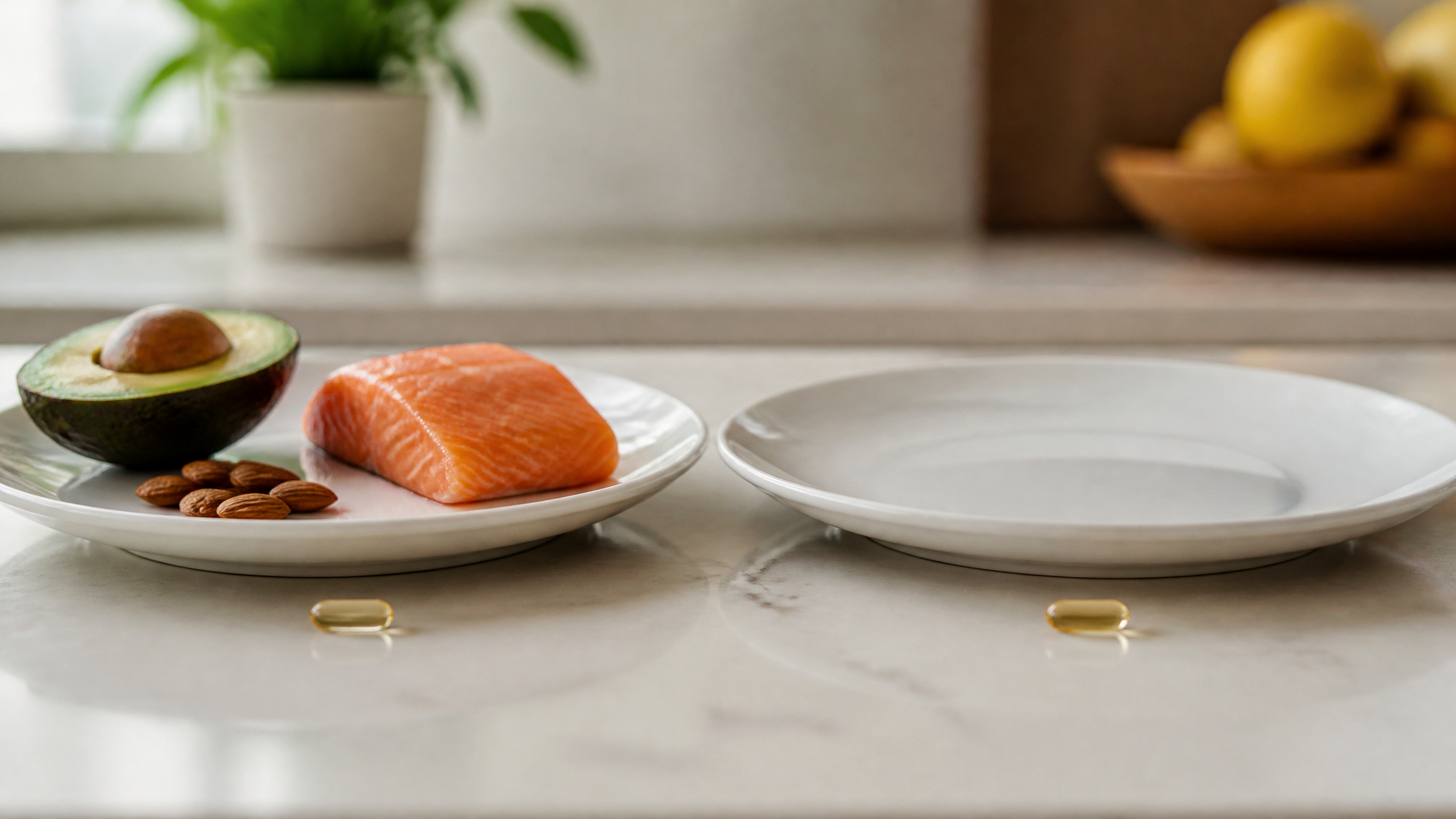
Even a tablespoon or two of oil, a handful of nuts, or half an avocado with your dose is usually enough to meaningfully improve uptake.
A Quick Word on MCT Oil
MCT (medium-chain triglyceride) oil deserves a special mention here. It's one of the simplest ways to make sure a fat-soluble compound has fat to travel with — no cooking, no prep. Because it's flavorless and mixes easily into coffee, smoothies, or shakes, it's an easy daily habit to pair with your supplements. If you don't always eat a fatty meal when you take your doses, keeping a clean C8 MCT oil on hand is a practical way to cover that gap.
Best Time of Day to Take Them
For fat-soluble compounds, the best time is simply with your largest fat-containing meal of the day — for most people that's lunch or dinner. Consistency matters more than the exact clock time: taking it at the same meal each day builds a reliable routine and steady levels. Water-soluble compounds, by contrast, are often fine first thing in the morning on an empty stomach.
Empty Stomach vs. Full Stomach — The Simple Rule
Here's the shortcut:
- Fat-soluble → take with a meal that contains fat (or a little MCT oil).
- Water-soluble → generally fine on an empty stomach, though food can reduce stomach upset.
When in doubt with a fat-soluble product, food wins. Taking a fat-soluble compound on a completely empty stomach is one of the most common reasons people don't see the results they expected.
Common Mistakes That Lower Absorption
- Taking fat-soluble compounds with only water, no food
- Pairing them with a fat-free or very low-fat meal
- Inconsistent timing day to day
- Taking certain minerals together that compete for absorption (e.g., large doses of calcium and iron at the same time)
- Washing everything down with coffee or tea, which can interfere with some compounds
Quick Reference Cheat Sheet
- Fat-soluble: with a fatty meal (or MCT oil), same meal each day
- Water-soluble: anytime, empty stomach is fine
- Always: stay consistent, and pair fat-soluble products with a little healthy fat
Frequently Asked Questions
Do I need a full meal, or is a little fat enough?
A small amount of healthy fat (a tablespoon of oil or MCT oil, some nuts, half an avocado) is usually enough.
Can I take fat-soluble supplements on an empty stomach?
You can, but you'll likely absorb less. Pair them with fat for best results.
Does the type of fat matter?
Any dietary fat helps; healthy sources like olive oil, avocado, nuts, and MCT oil are ideal.
What's the best time of day?
With your largest fat-containing meal, taken consistently.
Make absorption effortless. Pair your routine with a clean, flavorless Organic C8 MCT Oil — available in 16oz and 32oz. Taking fenbendazole powder? Grab the Fenbendazole Powder + MCT C8 Oil bundle and cover both in one order.
This article is for general educational purposes only and is not medical advice. It does not diagnose, treat, cure, or prevent any disease. Consult a qualified healthcare provider before starting any new supplement, especially if you take medications or have a health condition.