
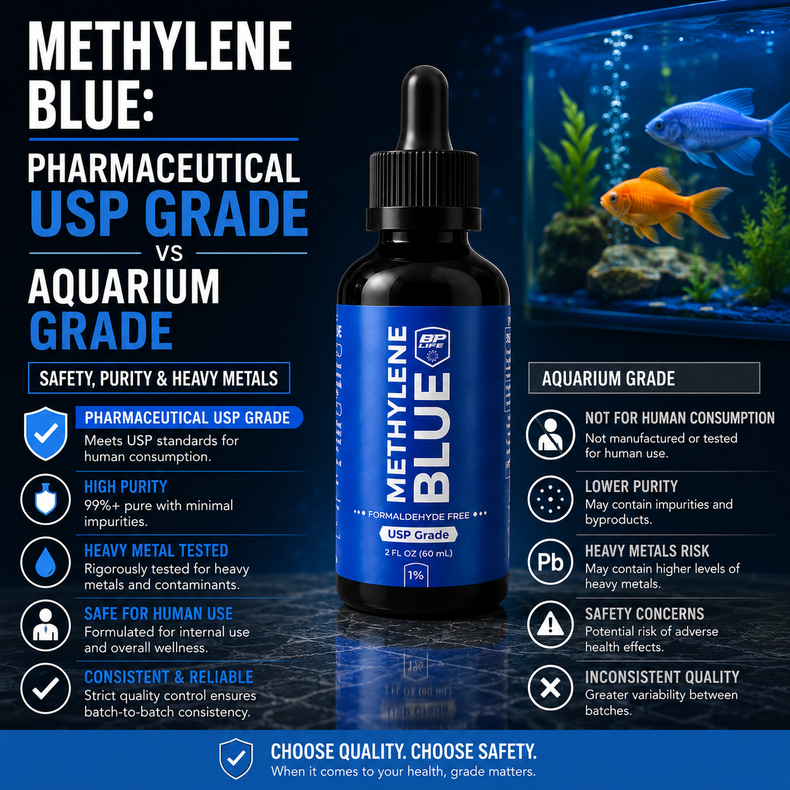
Methylene Blue: Pharmaceutical USP Grade vs Aquarium Grade

Methylene blue has been used for over a century in medical, scientific, and industrial applications. But not all methylene blue is created equal — and the grade you choose matters more than you think.
If you've searched for methylene blue online, you've probably seen everything from aquarium-grade fish tank treatments to pharmaceutical USP-grade products — often at wildly different prices. So what's the real difference? Is aquarium-grade methylene blue safe? And why does "Methylene Blue USP" cost more?
In this article, we'll break down the critical differences between USP pharmaceutical grade and aquarium/industrial grade methylene blue, including purity levels, heavy metal contamination risks, and why the grade you choose matters for safety.
What Does "USP Grade" Mean?
The United States Pharmacopeia (USP) is an independent, non-governmental organization that sets strict quality and purity standards for drugs, supplements, and certain chemicals. When a product is labeled USP-grade, it means it has passed rigorous testing for identity, strength, purity, and consistency.
For methylene blue, USP certification guarantees:
-
High purity with minimal contaminants
-
No harmful heavy metals (lead, mercury, arsenic, cadmium)
-
Consistency in potency and effectiveness
-
Third-party verified — every batch tested independently
By contrast, aquarium-grade, reagent-grade, or industrial-grade methylene blue is not held to the same standards — and that difference can be significant.
Aquarium Grade vs Pharmaceutical Grade Methylene Blue: Key Differences
1. Purity & Heavy Metal Contamination
-
USP Pharmaceutical Grade: Meets strict purity standards (typically 98%+ pure methylene blue). Tested for heavy metals including lead, mercury, arsenic, and cadmium. Guaranteed to be below safe thresholds.
-
Aquarium / Industrial Grade: May contain significant impurities including heavy metals, dyes, and unknown byproducts. These products are formulated for fish tanks — not for human safety. No requirement to test for or disclose heavy metal content.
2. Intended Use & Safety Standards
-
USP Pharmaceutical Grade: Manufactured under GMP (Good Manufacturing Practice) conditions. Safe for medical applications, research, and supplement use.
-
Aquarium Grade: Designed to treat fish diseases like ich and fungal infections. Manufactured for aquarium, textile, and industrial use only — where purity requirements are far lower.
3. Testing & Transparency
-
USP Pharmaceutical Grade: Undergoes rigorous third-party lab testing. Reputable suppliers publish certificates of analysis (COAs).
-
Aquarium / Industrial Grade: Rarely tested by independent labs. No COA provided. You don't know what's actually in the bottle.
Why Heavy Metals in Methylene Blue Are a Serious Concern
This is the part most people miss. Aquarium-grade methylene blue is cheap for a reason — the manufacturing process doesn't filter out heavy metal contaminants because it doesn't need to. Fish can tolerate levels of lead, mercury, and arsenic that would be harmful to humans.
Heavy metals are particularly dangerous because they bioaccumulate — they build up in your body over time and are difficult to eliminate. Even small amounts in each dose can add up to toxic levels with repeated use.
Common contaminants found in non-USP methylene blue:
-
Lead — neurotoxic, affects brain function and development
-
Mercury — damages kidneys and nervous system
-
Arsenic — classified carcinogen
-
Cadmium — toxic to kidneys and bones
-
Zinc and other metal impurities — can cause organ damage at high levels
USP-grade methylene blue is tested to confirm heavy metal levels are below safe pharmaceutical thresholds. Aquarium-grade products have no such requirement.
Who Needs to Care About Methylene Blue Grade?
Nootropic & Biohacking Use
Methylene blue has gained popularity for its potential neuroprotective and cognitive-enhancing effects. If you're using it as a nootropic supplement, purity is critical — non-USP methylene blue could contain toxic additives that undermine the very benefits you're seeking.
Research & Lab Purposes
Scientific research requires precision. Using USP-certified methylene blue ensures accurate and reliable results, free from unknown contaminants that could skew data.
Medical & Pharmaceutical Applications
Methylene blue has been studied for its potential benefits in supporting mitochondrial function, cellular health, and cognitive performance. In medical contexts, only USP-grade should be used to ensure safety and effectiveness.
Aquarium & Fish Tank Use
If you're only treating fish, aquarium-grade methylene blue is fine — it's designed for that purpose. But aquarium-grade products should never be used as a substitute for pharmaceutical-grade in any other application.
How to Identify Genuine USP-Grade Methylene Blue
Not every product that says "pharmaceutical grade" actually is. Here's what to look for:
✅ USP Certification — The label should explicitly state "USP grade" or "USP certified"
✅ Certificate of Analysis (COA) — Reputable suppliers provide third-party lab results showing purity and heavy metal testing
✅ Formaldehyde-Free — Some lower-grade products use formaldehyde as a stabilizer
✅ No Additives or Fillers — The only active ingredient should be methylene blue
✅ Trustworthy Supplier — Purchase from established companies with transparent sourcing and lab testing
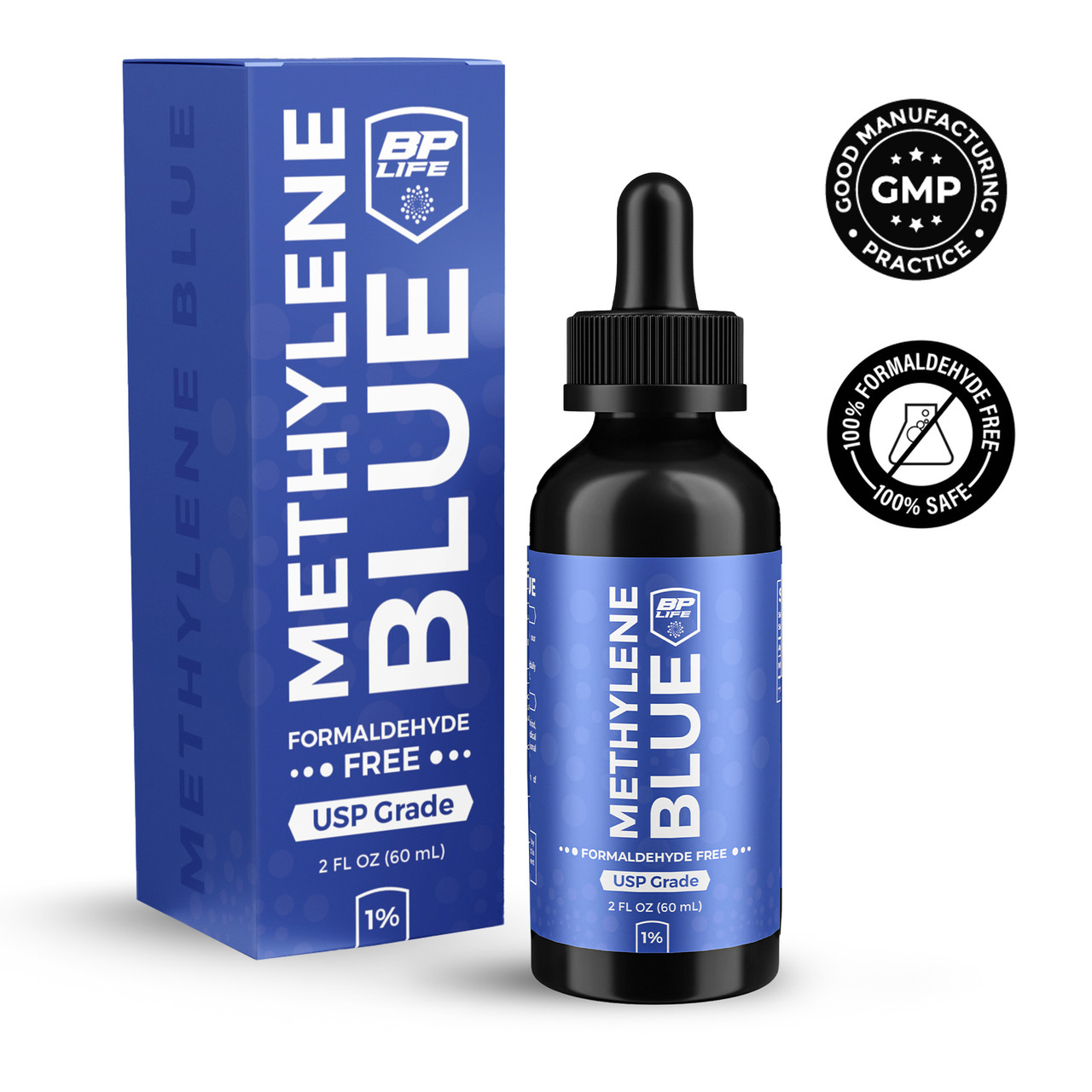
The Bottom Line: Grade Matters
The difference between aquarium-grade and pharmaceutical USP-grade methylene blue isn't just a label — it's a fundamental difference in purity, safety, and heavy metal contamination. Aquarium products are made for fish. USP products are made to pharmaceutical standards.
If you're using methylene blue for anything beyond treating a fish tank, USP pharmaceutical grade is the only responsible choice. Always verify purity, check for third-party lab testing, and buy from suppliers you trust.
Shop BP Life Methylene Blue — 1% USP Grade, Formaldehyde-Free, Lab-Tested →