
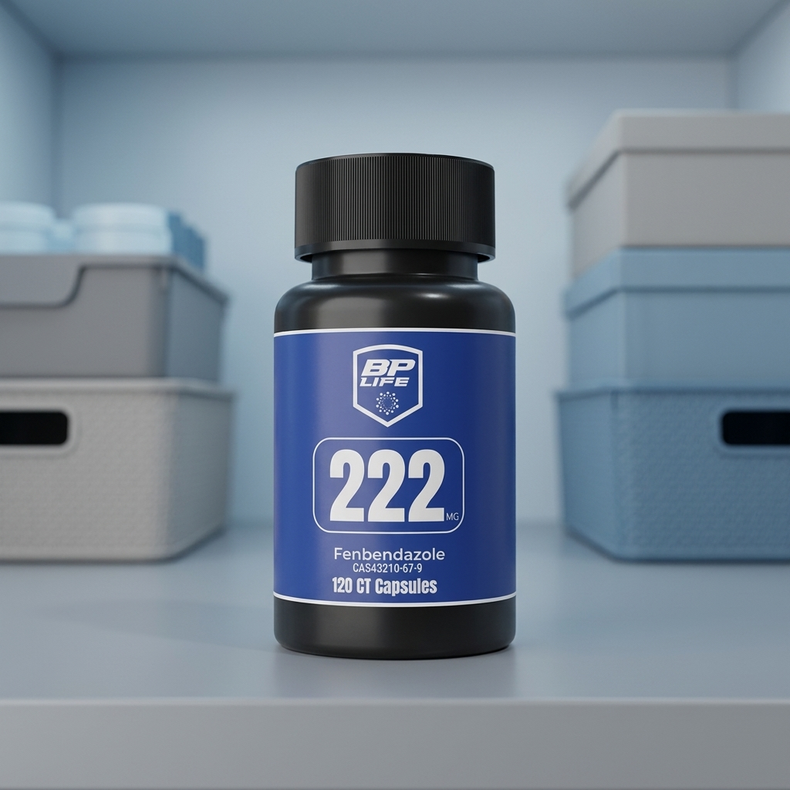
How to Store Fenbendazole: Shelf Life, Light, and Temperature Tips
By bb | BP Life Editorial Team
Knowing how to store fenbendazole properly isn't just a matter of organization — it directly affects potency and shelf life. Whether you've purchased bulk powder or pre-measured capsules, the way you store your product determines whether it stays effective over the weeks and months you use it. This guide covers everything: light sensitivity, temperature ranges, moisture control, container types, expected shelf life, and the warning signs of degradation.
Disclaimer: This article is for informational and educational purposes only. The information provided does not constitute medical advice and is not intended to diagnose, treat, cure, or prevent any disease or health condition. BP Life products are not evaluated by the Food and Drug Administration. Always consult a qualified healthcare professional before starting any new supplement or wellness routine.
Table of Contents
Why Storage Matters
Fenbendazole is a stable compound under the right conditions, but like most fine chemical powders, it is susceptible to degradation when exposed to prolonged heat, moisture, or direct light. Improper storage won't necessarily make the compound dangerous — but it can reduce its potency and shorten its effective shelf life, meaning you may be getting less active compound per dose than you expect.
This is particularly relevant for users who buy in larger quantities — such as the 100G or 1KG bulk powder — and plan to use their supply over several months. Getting storage right from the start protects your investment and ensures consistency. If you haven't decided which form to buy yet, see our comparison: Fenbendazole Powder vs. Capsules: Which Form Is Right for You?
Light Sensitivity
Fenbendazole, like many benzimidazole compounds, can be sensitive to prolonged UV and visible light exposure. While a brief exposure during daily handling is not a concern, storing your powder or capsules in a clear container on a sunny windowsill or under direct artificial lighting over time can contribute to gradual photodegradation.
"Always store fenbendazole in an opaque or amber-colored container, away from direct sunlight and artificial UV sources. Think of it like storing a quality vitamin supplement — same principles apply."
Best practices for light protection:
- Use amber glass or opaque containers for bulk powder
- Keep capsule bottles in their original dark bottle or a drawer
- Store inside a cabinet, pantry shelf, or medicine closet — not on a countertop
- If you re-package powder, choose dark or opaque bags/containers over clear ones
Temperature Guidelines
Fenbendazole is generally stable at room temperature — the industry standard for storing this compound is typically between 15°C and 25°C (59°F to 77°F), which is a normal indoor environment. Extended exposure to high heat (such as a car interior in summer, or a garage that gets very hot) should be avoided.
Room Temperature
59-77F (15-25C) — Ideal for daily-use storage. No special equipment needed.
Refrigerator
35-40F (2-4C) — Acceptable for long-term storage. Ensure airtight seal to prevent moisture condensation on removal.
Excessive Heat
Above 86F (30C) for extended periods — Avoid. Hot cars, garages, near stoves or radiators.
Freezer Cycling
Repeated freeze/thaw cycles can introduce moisture. Use a stable storage location instead.
Refrigerator storage is an option for long-term powder reserves (e.g., a 1KG quantity you're working through over many months). If you refrigerate, make sure your container has a tight seal and allow it to come to room temperature before opening to avoid condensation forming on the powder.
Moisture and Humidity Control
Moisture is the enemy of fine powders. Excess humidity causes clumping, creates conditions for microbial growth, and can compromise the physical integrity of capsule shells. Fenbendazole powder that has absorbed moisture may clump into hard chunks, making accurate measurement difficult and potentially affecting how evenly the compound is distributed in your dose.
Key moisture-control practices:
- Add a food-grade silica gel desiccant packet inside your powder container
- Never store in a bathroom medicine cabinet — bathroom humidity is too variable
- Keep the container sealed when not in use
- Use a dedicated small scoop or spatula rather than pouring, to avoid introducing ambient moisture
- If powder clumps slightly, it may still be usable — but severe clumping with color change warrants inspection (see Signs of Degradation below)
Best Container Types
The container you use makes a real difference, especially for bulk powder stored over the long term. Here's a ranked breakdown of container options:
Amber Glass Jar
Blocks UV, non-reactive, airtight lid. Ideal for long-term powder storage.
Dark HDPE Plastic Jar
Lightweight, light-blocking, common for supplement storage. Use if glass isn't practical.
Original Sealed Bag
If your product came in a resealable opaque bag, it's fine for short-to-medium term use.
Clear Plastic Bags
No UV protection. Fine for short-term handling only — not for storage.
Shelf Life Expectations
When stored correctly — in an opaque, airtight container, away from heat, light, and moisture — fenbendazole powder is considered stable for an extended period. Published stability data for benzimidazole compounds under proper storage conditions typically indicates shelf lives measured in years, not months.
General shelf life guidance:
- Unopened powder (proper storage): 2-3+ years is commonly cited in product documentation
- Opened powder (proper storage): 12-24 months is a reasonable expectation with consistent handling care
- Capsules (sealed bottle): Typically 18-24 months from manufacture date; check the expiration printed on your bottle
- Capsules (opened bottle): Use within 12 months; keep desiccant in the bottle
Always check the expiration or best-by date on your specific BP Life product. Store conditions can extend or shorten effective shelf life significantly — proper storage is not optional, it's part of getting value from your purchase.
Signs of Degradation
Knowing what to look for can help you determine whether your stored fenbendazole is still in acceptable condition. Warning signs include:
- Significant color change: Fresh fenbendazole powder is typically off-white to very light tan. Yellowing or browning can indicate degradation.
- Unusual odor: A sharp chemical or musty smell that differs from the original mild chalky scent may indicate moisture damage or contamination.
- Severe clumping with discoloration: Light clumping from humidity is often harmless, but hard, discolored clumps suggest moisture penetration over time.
- Capsule shell deterioration: Capsules that have become sticky, tacky, or misshapen have likely been exposed to excess humidity and should not be used.
- Past expiration date: When in doubt, do not use expired product. Contact BP Life for a replacement if your supply has expired.
Powder vs. Capsules: Storage Differences
While both forms share the same core storage principles, there are practical differences worth noting. For a full comparison of these two formats, see our article: Fenbendazole Powder vs. Capsules.
| Factor | Bulk Powder | Capsules |
|---|---|---|
| Moisture vulnerability | Higher (open surface area) | Lower (sealed in shell) |
| Light protection needed | Yes — opaque container | Yes — dark bottle |
| Desiccant recommended | Strongly yes | Yes, keep in bottle |
| Refrigeration option | Yes (airtight seal required) | Not typically needed |
| Ideal container | Amber glass or dark HDPE jar | Original dark bottle with cap |
Frequently Asked Questions
Does fenbendazole need to be refrigerated?
Refrigeration is not required for short-to-medium term storage. Room temperature (59-77F) in an opaque, airtight container is sufficient. Refrigeration is an option for very long-term storage of large quantities, but requires strict moisture control when removing from the fridge.
How long does fenbendazole powder last?
When stored correctly — cool, dark, dry, airtight — fenbendazole powder can remain stable for 2-3+ years unopened, and 12-24 months after opening. Always check the expiration date on your specific product.
Can fenbendazole go bad?
Yes. Improper storage — heat, moisture, direct light — can cause degradation over time. Warning signs include color changes (yellowing or browning), unusual odor, or severe clumping. When in doubt, do not use product past its expiration date.
Should I store fenbendazole in the bathroom cabinet?
No. Bathrooms have highly variable humidity from showers and baths. A bedroom drawer, pantry shelf, or closet shelf is a much better choice.
What container is best for storing fenbendazole powder?
An amber glass jar with an airtight lid is the gold standard. Dark HDPE plastic jars are a practical alternative. Add a food-grade silica gel desiccant packet inside for best results.
Continue Reading
Disclaimer: This article is for informational and educational purposes only. Nothing on this page constitutes medical advice. BP Life fenbendazole products are not intended to diagnose, treat, cure, or prevent any disease or health condition and have not been evaluated by the Food and Drug Administration. Always consult a licensed healthcare provider before beginning any new wellness routine.